A Code for Conduct: The 弟子规 (Dizi Gui)
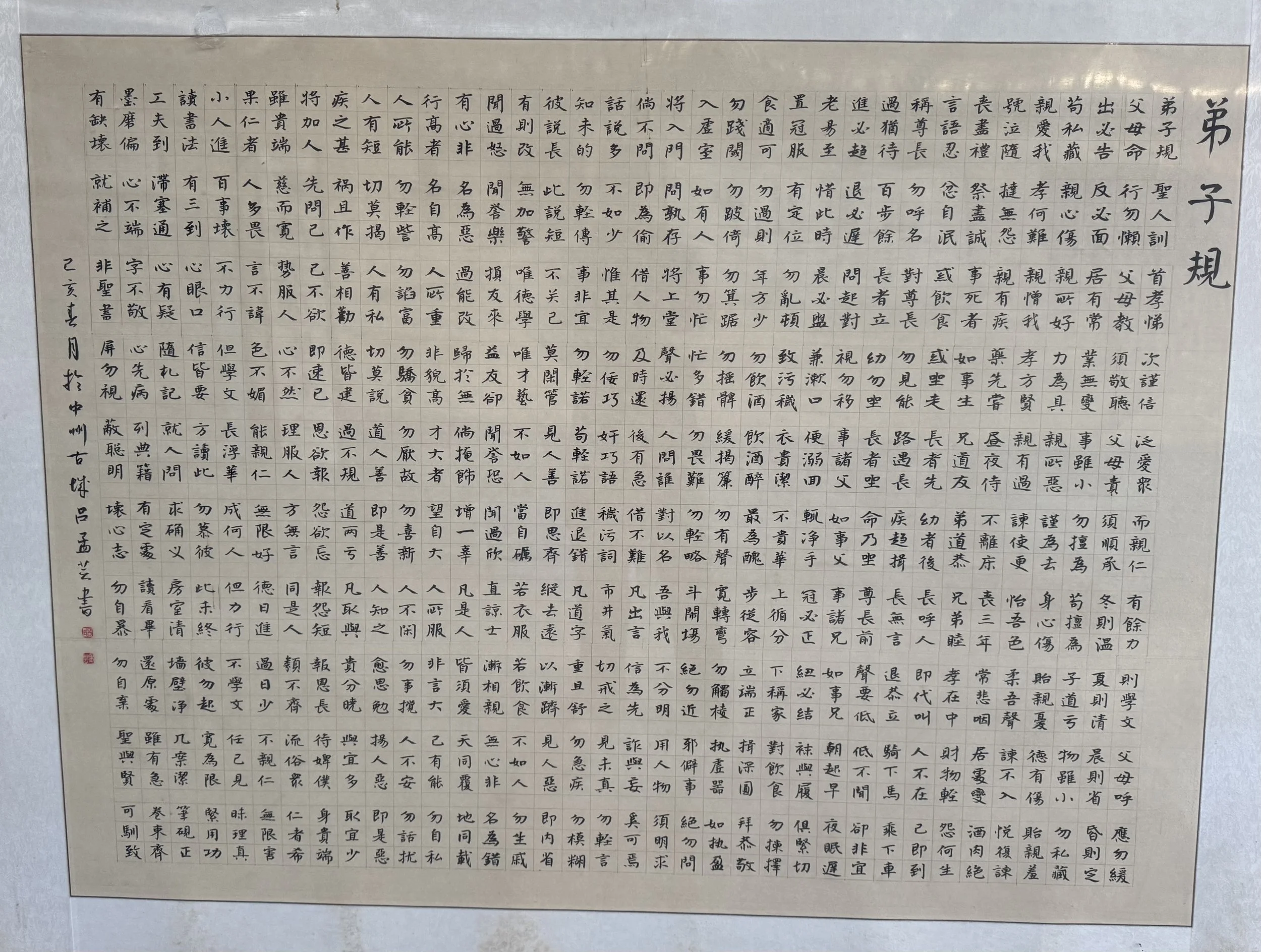
Copy of the Dizi Gui at Gulun Zen Academy
One of the first things you notice when you begin training in China is the difference in attitude.
In the West, we are trained to question. Our culture is one of disruption and innovation.
Traditional Chinese culture pivots around respect for the ancestors, humility and quiet discipline.
Three traditions shaped that. Chan (Zen) turns the attention inward, to the mind and our original nature. Taoism looks at our place in the natural world. The soft, flowing, yin side, less concerned with rules. Confucianism supplies the other half: a structured, yang code for how to conduct yourself, day to day, with the people around you.
The clearest expression of that Confucian side is a short text called the 弟子规 (Dìzǐguī), "The Student's Rules." It sets out, plainly, how to treat your parents, how to learn from a teacher, how to carry yourself. Nothing lofty. Just practical guidance on behaving well.
I'd never read it before it arrived in our school library. I've since read it several times.
What strikes me is how it balances the Taoist side rather than opposing it. Too much structure and we go rigid. Too much flow and we go slack. The aim is the one we work towards in the body: relaxed but not collapsed, strong but not stiff.
Most of us move through life now without much of a code at all, and it shows — in the ego, the sloppiness, the small discourtesies. A text like this steadies you. It isn't there to restrict you. It's there to help you learn better, respect the people around you, and live more easily among them.
English Version
The Student's Rules
General Preface
These rules come from the sages. First: be devoted to your parents and gentle with your siblings. Then: be careful in what you do, and honest in what you say. Love people broadly, and stay close to those of real character. If you've got energy left after all that, spend it studying.
At Home, Be Filial
When your parents call, answer straight away. When they ask something of you, do it without dragging your feet. Listen to their guidance with respect, and take their criticism without arguing back.
Keep them warm in winter, cool in summer. Check on them in the morning, settle them at night. Tell them where you're going, and check in when you're back. Keep steady habits — don't lurch from one thing to the next and worry them.
Don't make big decisions on your own, even small ones — that falls short of what you owe them. Don't hide things from them, even trivial things — it wounds them when they find out.
Provide what they love. Remove what they hate. Get hurt, and you worry them. Lose your integrity, and you shame them.
Being good to them when they're good to you is easy. The real test is staying devoted when they're difficult with you.
If they're wrong about something, correct them gently — soft face, soft voice. If they won't hear it, wait for a better moment and try again. Keep at it even through tears, and take a telling-off without resentment.
When they're ill, look after them properly — day and night, don't leave their side. When they die, grieve properly and mean it. Handle the funeral and the remembrance with full sincerity. Honour them in death as you did in life.
Away From Home, Respect Your Elders
An older sibling leads with kindness, a younger one with respect. Get that right and harmony — and filial piety — follow naturally. Don't fight over money or possessions and resentment won't have anywhere to take root. Hold your tongue and anger burns itself out.
Give way to your elders — in queues, at the table, wherever. Pass on their calls promptly. Don't use their first names. Don't show off in front of them.
Greet elders properly when you meet them, and don't push past them. Stand while they stand, sit only when told to. Keep your voice measured — audible but not raised — and answer questions directly, looking them in the eye.
Treat your uncles like your father, your cousins like your brothers.
Be Careful
Get up early, don't burn the night away — time runs out faster than you think. Keep yourself clean and put together: washed, dressed properly, tidy. Keep your things in order rather than scattered about.
Dress for cleanliness, not show — fitting your position and your means. Don't be precious about food; eat enough, not too much. Skip the alcohol while you're young — nothing uglier than being drunk.
Move with composure. Stand straight. Bow properly. Don't slouch, sprawl, or fidget. Move quietly and carefully through doors and corners. Treat an empty cup like a full one, an empty room like an occupied one — the discipline is the same either way.
Don't rush — haste is where mistakes live. But don't shy from hard things either, or treat them carelessly. Stay well clear of brawls and rough scenes, and don't go digging into other people's shady business.
Announce yourself before walking into a room. Give your name clearly when asked — "it's me" isn't good enough. Ask before you use something that isn't yours; not asking is stealing. Return what you borrow promptly, and next time you need something, it won't be a problem.
Be Trustworthy
Honesty comes before anything else you say. No lying, no exaggeration. Say less rather than more, and make sure what you do say is true — skip the flattery and the slick talk. Avoid crude language and gutter talk entirely.
Don't speak on what you haven't actually seen clearly, and don't repeat what you don't actually know. Don't make promises about things that aren't appropriate — a careless promise traps you either way. Speak clearly and unhurried.
Stay out of other people's business and gossip that isn't yours to comment on.
See someone doing well — aim to match it, even if you're a long way behind. See someone's fault — check yourself first. If it applies to you, fix it; if not, take it as a warning regardless.
If you fall short of others in character, learning, or skill — push yourself. If you fall short in clothes or food — don't let it bother you.
Getting angry at criticism and thrilled by flattery draws in the wrong people and pushes away the right ones. Being wary of praise and glad of honest feedback draws honest people closer.
An unintentional wrong is a mistake. A deliberate one is real wrongdoing. Fix a fault and it's finished. Cover it up and you've made it worse.
Love Everyone
Everyone deserves care — we all live under the same sky, on the same ground. Good conduct earns respect on its own; looks don't. Real talent earns regard on its own; big talk doesn't.
Don't hoard your abilities. Don't put others down for theirs. Don't fawn over wealth or sneer at poverty. Don't drop old friends chasing new ones.
Don't disturb people who are busy, or pile onto people who are already struggling. Never expose someone's weaknesses or spill their private business.
Speaking well of someone is itself a good act — it encourages them to keep going. Speaking badly of someone is itself a bad act — push it too far and it comes back on you.
Encourage each other and you both grow. Let each other's faults slide unchecked and you both lose ground.
Be generous when giving, modest when taking. Before you do something to someone, ask whether you'd want it done to you — if not, stop.
Repay kindness, let go of grudges — quickly forget the bad, hold onto the good. Even with people who work for you, be decent — firm, but kind and fair, not harsh.
You can force people into line, but you won't win their hearts that way. Reason will get you their agreement; force won't.
Stay Close to People of Character
Not everyone is alike — people who drift with the crowd are common; people of real character are rare. You'll know one when you meet them: direct, unimpressed by flattery, not chasing your approval.
Stay close to someone like that and you improve — daily, almost without noticing. Avoid people like that, and you'll find lesser company filling the gap, and everything starts to slide.
When There's Energy to Spare, Study
Action without learning breeds shallow people. Learning without action breeds people stuck in their own opinions, blind to what's actually true. You need both.
Reading properly takes three things working together: full attention, careful eyes, and reading aloud where it helps. Finish one thing before chasing the next.
Set yourself a reasonable timeframe, then actually work within it — the difficult parts open up with real effort. Note down what confuses you, and go find someone who can actually answer it.
Keep your space and your materials in order — it settles the mind before you even start. Sloppy handling of your books and tools reflects a sloppy state of mind.
Avoid material that corrupts rather than clarifies — it dulls you rather than sharpening you.
Don't give up on yourself. Growth of real character is available to anyone willing to keep at it.
Chinese & English Version
总叙 · General Preface
弟子规 圣人训 — Dìzǐ guī, shèngrén xùn — The Student's Rules: teachings of the sages
首孝弟 次谨信 — Shǒu xiào tì, cì jǐn xìn — First filial piety and brotherly respect, then care and trustworthiness
泛爱众 而亲仁 — Fàn ài zhòng, ér qīn rén — Love people broadly, and draw close to those of humane character
有余力 则学文 — Yǒu yúlì, zé xué wén — If energy remains, then study the texts
入则孝 · At Home, Be Filial
父母呼 应勿缓 — Fùmǔ hū, yìng wù huǎn — When parents call, answer without delay
父母命 行勿懒 — Fùmǔ mìng, xíng wù lǎn — When parents instruct, act without laziness
父母教 须敬听 — Fùmǔ jiào, xū jìng tīng — When parents teach, listen with respect
父母责 须顺承 — Fùmǔ zé, xū shùn chéng — When parents scold, accept it gracefully
冬则温 夏则凊 — Dōng zé wēn, xià zé qìng — Keep them warm in winter, cool in summer
晨则省 昏则定 — Chén zé xǐng, hūn zé dìng — Greet them at dawn, settle them at night
出必告 反必面 — Chū bì gào, fǎn bì miàn — Tell them before leaving, show your face on return
居有常 业无变 — Jū yǒu cháng, yè wú biàn — Keep steady habits, don't chop and change your pursuits
事虽小 勿擅为 — Shì suī xiǎo, wù shàn wéi — Even in small things, don't act unilaterally
苟擅为 子道亏 — Gǒu shàn wéi, zǐ dào kuī — To act alone falls short of a child's duty
物虽小 勿私藏 — Wù suī xiǎo, wù sī cáng — Even a small thing, don't hoard it secretly
苟私藏 亲心伤 — Gǒu sī cáng, qīn xīn shāng — Secrecy wounds your parents' hearts
亲所好 力为具 — Qīn suǒ hào, lì wéi jù — What they love, work to provide
亲所恶 谨为去 — Qīn suǒ wù, jǐn wéi qù — What they dislike, carefully remove
身有伤 贻亲忧 — Shēn yǒu shāng, yí qīn yōu — Hurt your body, and you burden them with worry
德有伤 贻亲羞 — Dé yǒu shāng, yí qīn xiū — Flaw your character, and you bring them shame
亲爱我 孝何难 — Qīn ài wǒ, xiào hé nán — When they love you, being filial is easy
亲憎我 孝方贤 — Qīn zēng wǒ, xiào fāng xián — When they don't, being filial shows real worth
亲有过 谏使更 — Qīn yǒu guò, jiàn shǐ gēng — When parents err, gently urge change
怡吾色 柔吾声 — Yí wú sè, róu wú shēng — Keep your face pleasant, your voice soft
谏不入 悦复谏 — Jiàn bù rù, yuè fù jiàn — If they won't hear it, wait and try again
号泣随 挞无怨 — Háo qì suí, tà wú yuàn — Even in tears, don't give up; bear a beating without resentment
亲有疾 药先尝 — Qīn yǒu jí, yào xiān cháng — When they're ill, taste the medicine first
昼夜侍 不离床 — Zhòu yè shì, bù lí chuáng — Tend them day and night, don't leave the bedside
丧三年 常悲咽 — Sāng sān nián, cháng bēi yè — Mourn three years, stay sorrowful
居处变 酒肉绝 — Jū chù biàn, jiǔ ròu jué — Change your habits, give up wine and meat
丧尽礼 祭尽诚 — Sāng jìn lǐ, jì jìn chéng — Full propriety in the funeral, full sincerity in the offerings
事死者 如事生 — Shì sǐ zhě, rú shì shēng — Serve the dead as you served the living
出则弟 · Away From Home, Respect Elders
兄道友 弟道恭 — Xiōng dào yǒu, dì dào gōng — The elder's way is kindness, the younger's is respect
兄弟睦 孝在中 — Xiōngdì mù, xiào zài zhōng — Where siblings are in harmony, filial piety is already there
财物轻 怨何生 — Cái wù qīng, yuàn hé shēng — Hold money lightly, and where would resentment come from?
言语忍 忿自泯 — Yányǔ rěn, fèn zì mǐn — Hold your tongue, and anger fades on its own
或饮食 或坐走 — Huò yǐn shí, huò zuò zǒu — Whether eating, sitting, or walking
长者先 幼者后 — Zhǎng zhě xiān, yòu zhě hòu — Elders go first, the young follow
长呼人 即代叫 — Zhǎng hū rén, jí dài jiào — When an elder calls someone, relay it at once
人不在 己即到 — Rén bú zài, jǐ jí dào — If they're not there, go yourself
称尊长 勿呼名 — Chēng zūn zhǎng, wù hū míng — Don't use elders' given names
对尊长 勿见能 — Duì zūn zhǎng, wù xiàn néng — Don't show off in front of them
路遇长 疾趋揖 — Lù yù zhǎng, jí qū yī — Meet an elder on the road, hurry over and bow
长无言 退恭立 — Zhǎng wú yán, tuì gōng lì — If they say nothing, step back and stand respectfully
骑下马 乘下车 — Qí xià mǎ, chéng xià chē — Dismount your horse, get out of your carriage
过犹待 百步余 — Guò yóu dài, bǎi bù yú — Wait until they're a hundred paces off
长者立 幼勿坐 — Zhǎng zhě lì, yòu wù zuò — While an elder stands, the young don't sit
长者坐 命乃坐 — Zhǎng zhě zuò, mìng nǎi zuò — Sit only once told to
尊长前 声要低 — Zūn zhǎng qián, shēng yào dī — Keep your voice low before elders
低不闻 却非宜 — Dī bù wén, què fēi yí — Though too low to hear isn't right either
进必趋 退必迟 — Jìn bì qū, tuì bì chí — Approach briskly, withdraw slowly
问起对 视勿移 — Wèn qǐ duì, shì wù yí — Answer questions with a steady gaze
事诸父 如事父 — Shì zhū fù, rú shì fù — Treat uncles as your own father
事诸兄 如事兄 — Shì zhū xiōng, rú shì xiōng — Treat cousins as your own brothers
谨 · Be Prudent
朝起早 夜眠迟 — Zhāo qǐ zǎo, yè mián chí — Rise early, sleep late
老易至 惜此时 — Lǎo yì zhì, xī cǐ shí — Old age comes fast — treasure this time
晨必盥 兼漱口 — Chén bì guàn, jiān shù kǒu — Wash up and rinse your mouth each morning
便溺回 辄净手 — Biàn niào huí, zhé jìng shǒu — Clean your hands after the toilet
冠必正 纽必结 — Guān bì zhèng, niǔ bì jié — Hat straight, buttons fastened
袜与履 俱紧切 — Wà yǔ lǚ, jù jǐn qiè — Socks and shoes fitted snug
置冠服 有定位 — Zhì guān fú, yǒu dìng wèi — Keep clothes in their proper place
勿乱顿 致污秽 — Wù luàn dùn, zhì wūhuì — Don't toss them and get them dirty
衣贵洁 不贵华 — Yī guì jié, bú guì huá — Clothing prized for cleanliness, not extravagance
上循分 下称家 — Shàng xún fèn, xià chèn jiā — Dress fitting your station and your means
对饮食 勿拣择 — Duì yǐnshí, wù jiǎn zé — Don't be fussy about food
食适可 勿过则 — Shí shì kě, wù guò zé — Eat what's fitting, don't overdo it
年方少 勿饮酒 — Nián fāng shào, wù yǐn jiǔ — While young, don't drink
饮酒醉 最为丑 — Yǐn jiǔ zuì, zuì wéi chǒu — Drunkenness is the ugliest thing there is
步从容 立端正 — Bù cóngróng, lì duānzhèng — Walk unhurried, stand upright
揖深圆 拜恭敬 — Yī shēn yuán, bài gōngjìng — Bow fully, kneel with reverence
勿践阈 勿跛倚 — Wù jiàn yù, wù bǒ yǐ — Don't step on the threshold, don't lean lopsided
勿箕踞 勿摇髀 — Wù jī jù, wù yáo bì — Don't sprawl-sit, don't jiggle your legs
缓揭帘 勿有声 — Huǎn jiē lián, wù yǒu shēng — Lift curtains slowly and quietly
宽转弯 勿触棱 — Kuān zhuǎn wān, wù chù léng — Take corners wide, don't clip the edges
执虚器 如执盈 — Zhí xū qì, rú zhí yíng — Hold an empty vessel as if it were full
入虚室 如有人 — Rù xū shì, rú yǒu rén — Enter an empty room as if someone were there
事勿忙 忙多错 — Shì wù máng, máng duō cuò — Don't rush — haste breeds mistakes
勿畏难 勿轻略 — Wù wèi nán, wù qīng lüè — Don't fear difficulty, don't be careless either
斗闹场 绝勿近 — Dòu nào chǎng, jué wù jìn — Never go near brawls
邪僻事 绝勿问 — Xié pì shì, jué wù wèn — Never poke into shady business
将入门 问孰存 — Jiāng rù mén, wèn shú cún — Before entering a door, ask who's inside
将上堂 声必扬 — Jiāng shàng táng, shēng bì yáng — Before entering a hall, announce yourself
人问谁 对以名 — Rén wèn shéi, duì yǐ míng — If asked who's there, give your name
吾与我 不分明 — Wú yǔ wǒ, bù fēnmíng — "It's me" isn't clear enough
用人物 须明求 — Yòng rén wù, xū míng qiú — To use something of someone else's, ask clearly
倘不问 即为偷 — Tǎng bú wèn, jí wéi tōu — Not asking is stealing
借人物 及时还 — Jiè rén wù, jí shí huán — Return what you borrow promptly
后有急 借不难 — Hòu yǒu jí, jiè bù nán — Then borrowing again won't be hard
信 · Be Trustworthy
凡出言 信为先 — Fán chū yán, xìn wéi xiān — In all you say, honesty comes first
诈与妄 奚可焉 — Zhà yǔ wàng, xī kě yān — How could deceit or wild talk ever be allowed?
话说多 不如少 — Huà shuō duō, bùrú shǎo — Talking a lot is worse than talking little
惟其是 勿佞巧 — Wéi qí shì, wù nìng qiǎo — Speak only truth, skip the slick flattery
奸巧语 秽污词 — Jiān qiǎo yǔ, huì wū cí — Cunning talk, filthy language
市井气 切戒之 — Shìjǐng qì, qiè jiè zhī — Gutter talk — avoid it firmly
见未真 勿轻言 — Jiàn wèi zhēn, wù qīng yán — Unclear what you saw? Don't speak lightly of it
知未的 勿轻传 — Zhī wèi dì, wù qīng chuán — Uncertain what you know? Don't spread it
事非宜 勿轻诺 — Shì fēi yí, wù qīng nuò — If it's not right, don't promise lightly
苟轻诺 进退错 — Gǒu qīng nuò, jìn tuì cuò — A careless promise leaves you stuck either way
凡道字 重且舒 — Fán dào zì, zhòng qiě shū — Speak every word clearly, unhurried
勿急疾 勿模糊 — Wù jí jí, wù móhu — Don't rush, don't mumble
彼说长 此说短 — Bǐ shuō cháng, cǐ shuō duǎn — Gossip about this fault, that flaw
不关己 莫闲管 — Bù guān jǐ, mò xián guǎn — If it's not your business, leave it alone
见人善 即思齐 — Jiàn rén shàn, jí sī qí — See someone's goodness, aspire to match it
纵去远 以渐跻 — Zòng qù yuǎn, yǐ jiàn jī — Even far behind, close the gap gradually
见人恶 即内省 — Jiàn rén è, jí nèi xǐng — See someone's fault, look inward at once
有则改 无加警 — Yǒu zé gǎi, wú jiā jǐng — If you share it, fix it; if not, take it as a warning anyway
唯德学 唯才艺 — Wéi dé xué, wéi cái yì — In character, learning, talent and skill
不如人 当自砺 — Bùrú rén, dāng zì lì — Fall short of others, and push yourself harder
若衣服 若饮食 — Ruò yīfú, ruò yǐnshí — As for clothes, as for food
不如人 勿生戚 — Bùrú rén, wù shēng qī — Fall short of others there, and don't sulk about it
闻过怒 闻誉乐 — Wén guò nù, wén yù lè — Anger at criticism, delight at praise
损友来 益友却 — Sǔn yǒu lái, yì yǒu què — Draws bad company in, good friends away
闻誉恐 闻过欣 — Wén yù kǒng, wén guò xīn — Wary of praise, glad of criticism
直谅士 渐相亲 — Zhí liàng shì, jiàn xiāng qīn — Honest people gradually draw near
无心非 名为错 — Wú xīn fēi, míng wéi cuò — A wrong without intent is a mistake
有心非 名为恶 — Yǒu xīn fēi, míng wéi è — A wrong with intent is wickedness
过能改 归于无 — Guò néng gǎi, guī yú wú — Correct a fault, and it's as if it never was
倘掩饰 增一辜 — Tǎng yǎnshì, zēng yī gū — Cover it up, and you add another offence
泛爱众 · Love All People
凡是人 皆须爱 — Fán shì rén, jiē xū ài — Everyone deserves love, without exception
天同覆 地同载 — Tiān tóng fù, dì tóng zài — Same sky above, same earth beneath
行高者 名自高 — Xíng gāo zhě, míng zì gāo — High conduct earns a high name on its own
人所重 非貌高 — Rén suǒ zhòng, fēi mào gāo — What people respect isn't good looks
才大者 望自大 — Cái dà zhě, wàng zì dà — Great talent earns great regard on its own
人所服 非言大 — Rén suǒ fú, fēi yán dà — What people admire isn't big talk
己有能 勿自私 — Jǐ yǒu néng, wù zìsī — Have ability? Don't hoard it
人所能 勿轻訾 — Rén suǒ néng, wù qīng zǐ — Don't belittle others' abilities
勿谄富 勿骄贫 — Wù chǎn fù, wù jiāo pín — Don't flatter the rich, don't sneer at the poor
勿厌故 勿喜新 — Wù yàn gù, wù xǐ xīn — Don't tire of old friends chasing new ones
人不闲 勿事搅 — Rén bù xián, wù shì jiǎo — Someone's busy? Don't disturb them
人不安 勿话扰 — Rén bù ān, wù huà rǎo — Someone's unsettled? Don't pester them
人有短 切莫揭 — Rén yǒu duǎn, qiè mò jiē — Never expose someone's shortcomings
人有私 切莫说 — Rén yǒu sī, qiè mò shuō — Never reveal their private matters
道人善 即是善 — Dào rén shàn, jí shì shàn — Speaking someone's good is itself good
人知之 愈思勉 — Rén zhī zhī, yù sī miǎn — Hearing it spurs them to do better
扬人恶 即是恶 — Yáng rén è, jí shì è — Broadcasting someone's fault is itself wicked
疾之甚 祸且作 — Jí zhī shèn, huò qiě zuò — Attack too hard, and trouble follows
善相劝 德皆建 — Shàn xiāng quàn, dé jiē jiàn — Encourage each other's virtue, and both grow
过不规 道两亏 — Guò bù guī, dào liǎng kuī — Fail to correct each other, and both fall short
凡取与 贵分晓 — Fán qǔ yǔ, guì fēnxiǎo — In giving and taking, clarity matters most
与宜多 取宜少 — Yǔ yí duō, qǔ yí shǎo — Give generously, take sparingly
将加人 先问己 — Jiāng jiā rén, xiān wèn jǐ — Before doing to others, ask yourself first
己不欲 即速已 — Jǐ bú yù, jí sù yǐ — Wouldn't want it done to you? Stop at once
恩欲报 怨欲忘 — Ēn yù bào, yuàn yù wàng — Repay kindness, forget grudges
报怨短 报恩长 — Bào yuàn duǎn, bào ēn cháng — Let resentment be brief, gratitude long
待婢仆 身贵端 — Dài bìpú, shēn guì duān — With servants, conduct yourself properly
虽贵端 慈而宽 — Suī guì duān, cí ér kuān — And proper as you are, be kind and generous too
势服人 心不然 — Shì fú rén, xīn bùrán — Force submission, and hearts don't follow
理服人 方无言 — Lǐ fú rén, fāng wú yán — Win with reason, and there's nothing left to argue
亲仁 · Draw Close to the Humane
同是人 类不齐 — Tóng shì rén, lèi bù qí — All human, but not all alike
流俗众 仁者希 — Liú sú zhòng, rén zhě xī — The crowd-followers are many, the humane rare
果仁者 人多畏 — Guǒ rén zhě, rén duō wèi — A truly humane person commands quiet respect
言不讳 色不媚 — Yán bú huì, sè bú mèi — Speaks frankly, doesn't flatter
能亲仁 无限好 — Néng qīn rén, wúxiàn hǎo — Draw close to such a person — boundless good
德日进 过日少 — Dé rì jìn, guò rì shǎo — Character grows daily, faults shrink daily
不亲仁 无限害 — Bù qīn rén, wúxiàn hài — Fail to, and boundless harm follows
小人进 百事坏 — Xiǎorén jìn, bǎi shì huài — Petty people move in, everything falls apart
余力学文 · With Energy to Spare, Study
不力行 但学文 — Bù lìxíng, dàn xué wén — Practise nothing, only study
长浮华 成何人 — Zhǎng fúhuá, chéng hé rén — You'll grow only vanity — what does that make you?
但力行 不学文 — Dàn lìxíng, bù xué wén — Practise everything, never study
任己见 昧理真 — Rèn jǐ jiàn, mèi lǐ zhēn — You'll lean on your own opinions, blind to the truth
读书法 有三到 — Dúshū fǎ, yǒu sān dào — The method of reading has three "arrivals"
心眼口 信皆要 — Xīn yǎn kǒu, xìn jiē yào — Mind, eye, mouth — all three genuinely matter
方读此 勿慕彼 — Fāng dú cǐ, wù mù bǐ — Reading this, don't long for that
此未终 彼勿起 — Cǐ wèi zhōng, bǐ wù qǐ — Don't start the next until this one's done
宽为限 紧用功 — Kuān wéi xiàn, jǐn yònggōng — Set a generous deadline, work hard within it
工夫到 滞塞通 — Gōngfū dào, zhìsè tōng — Put in the effort, and the stuck parts open up
心有疑 随札记 — Xīn yǒu yí, suí zhájì — Doubt something? Jot it down at once
就人问 求确义 — Jiù rén wèn, qiú què yì — Ask someone, seek the precise meaning
房室清 墙壁净 — Fáng shì qīng, qiángbì jìng — Room tidy, walls clean
几案洁 笔砚正 — Jī àn jié, bǐ yàn zhèng — Desk clear, brush and inkstone in place
墨磨偏 心不端 — Mò mó piān, xīn bù duān — Grind the ink crookedly, and the mind's not settled either
字不敬 心先病 — Zì bú jìng, xīn xiān bìng — Write carelessly, and the mind's already slack
列典籍 有定处 — Liè diǎnjí, yǒu dìng chù — Keep books in a fixed place
读看毕 还原处 — Dú kàn bì, huán yuán chù — Return them once you're done
虽有急 卷束齐 — Suī yǒu jí, juǎn shù qí — Even in a rush, keep them neat
有缺坏 就补之 — Yǒu quē huài, jiù bǔ zhī — If damaged, mend them promptly
非圣书 屏勿视 — Fēi shèng shū, bǐng wù shì — Books that aren't wholesome, keep out of sight
蔽聪明 坏心志 — Bì cōngmíng, huài xīnzhì — They dull the mind and corrupt resolve
勿自暴 勿自弃 — Wù zì bào, wù zì qì — Don't despair of yourself, don't give up on yourself
圣与贤 可驯致 — Shèng yǔ xián, kě xún zhì — Sagehood is reached step by step